◆ Independent · Investigative · Charlotte, NC ◆ No Sponsors. No Soft Questions. ◆ Est. 2026 ◆
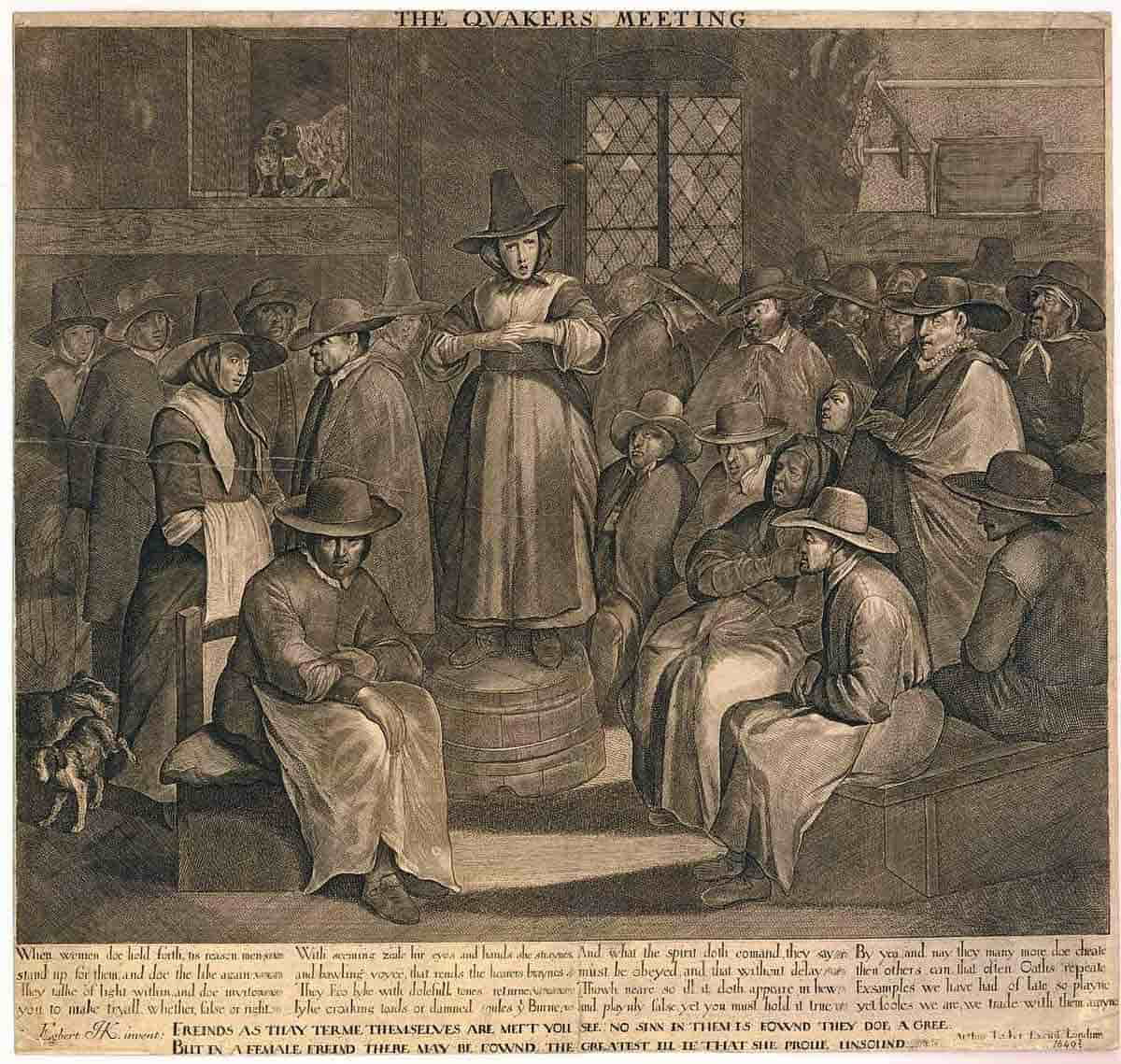
What A 17th Century Movement Can Teach Us About Modern Democracy
In a city full of managed participation and polished certainty, one Quaker meeting is still trying to practice the harder parts of democracy: patience, discernment, equality, and the possibility of being changed by what it hears.

Kaya Allyn
2026-03-23
In This Story
Listen to this story
Listen
The Question That Wouldn’t Leave
Quakers, also known as the Religious Society of Friends, have fascinated me for years. They’d show up in history through abolition, pacifism, public witness, moral stubbornness and every time I’d have basically the same reaction: of course. Hell yes.
About ten years ago, after a long day cleaning houses in Seattle, I was sitting in the parking lot of a bougie grocery store when a question hit me that felt weirdly urgent: did Quakers even still exist? Were they thriving? What were they now?
So I looked into it.
The answer was not especially comforting. Like a lot of religious communities, Quaker meetings were aging, shrinking, vulnerable. What unsettled me wasn’t just that possibility. It was how hard it hit me. I was scared. Angry. Kind of panicked. Then I had the extremely atheist reaction of telling myself: this is not my problem.
But it stayed with me anyway.
Now I live in Charlotte, where we have no shortage of process. Public hearings. Budget meetings. Listening sessions. Community engagement that somehow always seems to happen after the real shape of the decision is already baked in by people with more access, more time, and better email signatures. Charlotte loves the performance of participation. It is much less comfortable with participation that might actually change anything.
That’s part of what makes Charlotte Friends Meeting feel so different.
I started attending in November 2025, the same week the city was getting hit by the fallout from federal immigration enforcement tied to “Operation Charlotte’s Web.” Even local officials seemed unclear on whether the operation had actually ended while fear kept spreading through immigrant communities. It was a hell of a first meeting. Heavy. Grieving. Angry. But what hit me was that the room didn’t stop at feeling bad. People were already moving toward food drives, neighborhood support, training, practical help. They weren’t doing that thing where people confuse caring with action.
The conversations for this piece happened in the meeting house library during fellowship, after worship and before forum. The walls are lined with donated books on Quaker history, from North Carolina to the wider world. The chairs look like they’ve been there since the Clinton administration — practical, businesslike, cushioned enough to do the job. A little round table takes up half the room. With more than four people, it can feel a little cramped, but in a way that feels more like kids whispering after lights out. We had to shut the door because the fellowship hall was so loud.
That felt important.
There’s a cliché about Quakers as quiet, meek people, but that misses the actual texture of the place. Worship is silent. Fellowship is not. Marian later mentioned that the acoustics in the fellowship hall aren’t great, and she’s right — the noise builds on itself. The nursery is right next door. The whole building can tip into a kind of warm cacophony. I didn’t mind it. It felt less like disruption than proof of life, like a splash of cold water in the morning in the best sense.
On a typical Sunday, people gather for Meeting for Worship at 10 a.m., then announcements and fellowship, then a forum at 11:45. On March 22, the forum was a four-hour retreat meant to help people know one another more deeply and reflect on their spiritual lives and roles in the wider world. Other Sundays turn toward Quaker basics, Peace and Social Concerns, speakers, or training in nonviolent direct action. This is not just a room where people sit quietly and go home. It is a room with an afterlife.
It is also not a museum piece. On a typical Sunday, I’d estimate 30 to 40 people show up.
What Silence Is Doing Here
"What surprised him most was “deep hospitality,” a “lack of official structure,” and yet “deep networks and connection” where “stuff happens.” Every week, he said, “there’s someone to greet me at the door.” "
So what is unprogrammed worship, actually?
On paper, it’s simple. No sermon. No stage. No one rushing in to save the room from stillness. People sit. They wait. If someone feels led to speak, they do. If not, the silence stays there and makes you deal with yourself.
Marian Beane, one of the meeting’s longtime members, explained it in a way that made more sense than the outside caricature ever has. What looks like “nothing” from the outside, she said, is really “outer silence” and “inner searching.” The point is not blankness. The point is becoming open (to Spirit, to Light, to Truth, to whatever language makes sense to the person in the room) and doing that not just for yourself but with and for each other. The room is held collectively. What looks simple, Marian said, is not actually easy. It takes practice, discipline, and trying again.
She also shared the meeting’s own sense of its purpose: to be guided by Spirit, individually and collectively; to foster a caring, welcoming, and inclusive fellowship; to deepen worship, faith, and practice; to broaden understanding of Quaker principles and history; and to strengthen service and witness in the broader world. It is formal language, but it also happens to be a pretty good description of what the meeting is trying to do.
That tracks with what it feels like.
For people coming from louder traditions, the silence can hit hard. Anissa New Walker told me she came out of “a very big, big Harlem Baptist church” where the minister would say, “let’s have a moment of silence,” and the moment would basically be over before it started. She snaps her fingers to illustrate the point. A Friend told her she may like a Quaker meeting. After her first Meeting, she said, “Oh, I finally found where God is … It’s not a minister talking to me.” She still bounced back and forth for a while (Quaker meeting for a few weeks, then Abyssinian because the music was amazing) but she kept coming back to the silence. “That first time was like, that’s where God is.” Abyssinian Baptist Church, founded in 1808, is one of the oldest Black Baptist churches in the United States, which makes the contrast even sharper.
Other people describe that same silence differently. Keona Simon said it felt “different, but freeing.” Braveheart Gillani said his first silent worship was “really uncomfortable,” full of fidgeting and “monkey mind,” until eventually he became “friends with the monkey.” Mary described it less as peace than as focused meditation, a way to sit with “a spiritual problem” long enough to “tease it out.”
But silence is not experienced the same way by everyone, and neither is belonging.
Keona also brought in something the piece needs if it’s going to be more than a soft-focus story about quiet nice people: race, belonging, and misrecognition. She talked about being teased for being Quaker as a teenager in Washington, D.C., especially as a person of color without many people around her who understood Quakerism in the way she needed. “You don’t really have allies,” she said, “or people that stand with you… that understand Quakerism in a way that you need it as a teenager.” Coming back later felt like being guided “back to where I belonged in the first place.” She said coming to Charlotte Friends was “very easy, very breezy.”.
There isn’t, as far as I could find, a reliable public number for Black Quakers in Charlotte or nationally. What is easy to find is Quaker institutions admitting that modern meetings are often white-dominated and that Black Friends have long had to navigate exclusion inside a tradition that talks constantly about equality. Friends General Conference says outright that many African American Friends do not feel free or equal in their religious home and publishes anti-racism resources asking meetings to confront how white supremacy shapes meeting culture.
Charlotte Friends itself appears to be in a period of transition. It still skews older and white, but there has been a noticeable influx of more diverse attenders, especially younger people and families. People are arriving because they seem to be looking for something that is politically awake without being spiritually hollow, and spiritually serious without retreating from the world. You can feel the meeting trying to absorb that influx carefully: Quaker basics, more explanation, more gentle guidance into the rhythm.
What Keeps People Coming Back
The silence is not a spa treatment. It refuses to let you run from it immediately but doesn’t erase friction.
If the silence is what draws you in, the community is what makes people stay.
Mary found Charlotte Friends because someone on X told her she “might be a Quaker,” which honestly feels correct for the era. She showed up in the middle of a divorce and stayed because she found “a lot of community” and “a lot of acceptance without a dogma.” She said the meeting gave her “many shoulders, many hands,” and put it in the cleanest possible terms: “If you just show up, people will be kind.”
That sounds small until you compare it to how most institutions actually work.
A lot of places will welcome you after you’ve already edited yourself into something acceptable. Dress right. Talk right. Smooth the edges off. What Mary found instead was a room where she could stop performing for a minute and just be held. She compared it, interestingly, to AA — not because it was the same, but because it offered the same basic supportive function without all the talking. “You kind of just get a chance to gather yourself and get grounded,” she said.
If Mary gives the piece its emotional center, Braveheart gives it the civic spine.
He came to Charlotte Friends the same way plenty of transplants find anything in this city: online, while job hunting. He’d already attended meetings in Texas and Ohio. What surprised him here was “deep hospitality,” a “lack of official structure,” and yet “deep networks and connection” where “stuff happens.” Every week, he said, “there’s someone to greet me at the door.”
Then he said the line that should probably be bolted to the wall of every government building in Mecklenburg County: “Priority is not given to the solutions, but the process of the solutions.”
That’s it. That’s the whole wound.
Charlotte is addicted to solutions. Announced solutions. Rendered solutions. Consultant-approved solutions. It likes outcomes that arrive looking polished and inevitable. What it does not like is a process that might actually slow the machine down, complicate the answer, or force the people in charge to hear something they were hoping to manage.
The Part Most Institutions Can’t Do
"Simon said the meeting matters because of its involvement in the wider community. New Walker’s own sense of stewardship reaches first toward “the bees and the trees and birds,” but she spoke with admiration about people in the meeting who are “really out there for lots of different communities.”"
That’s where Marian matters.
Quaker decision-making gets lazily described as “consensus,” but Marian pushed back on that. Consensus, she said, is just finding something everybody can agree to. Discernment is different. It asks not simply, What can we all live with? But what are we led toward?
That is not a small distinction. It means the goal is not papering over conflict or getting to yes as quickly as possible. It means sitting in tension, listening longer than is comfortable, revising, returning, and refusing the cheap version of agreement.
Marian described how meeting minutes are shaped through drafts, worshipful testing, revision, and return until the meeting can honestly stand behind them.
Anne Van Newkirk adds the outward logic of all this. A minute, she said, is Friends “coming together to put into writing the thoughts, feelings, inspiration of that moment,” and it does not become a capital-M Minute unless the entire meeting has “spent time with it, thought about it, seasoned it,” and come to unity around it.
She also gave the line that clarifies the whole thing: “We are a faith community. Not a social action group, so our actions come out of our faith.”
That distinction matters. From the outside, it would be easy to flatten Charlotte Friends into a room full of politically aligned people with good manners and a spiritual aesthetic. Anne is explicit that this is not how they understand themselves. They are not “just a meditation group.” They are not group therapy. They are a faith community trying to live what they say they believe. That is the bridge between the silence and the witness.
When I asked Anne what “speaking and living our Truth” means in practical terms, she answered in a way that quietly explains the meeting’s whole posture: there is not really a divide between who she is at the meeting house and how she tries to live her life. Worship, she said, is “a preparation for being in the world.”
That outward pull is all over the meeting’s life now. Anne described how the meeting has moved over time between more individual leadings and more collective action. When she first came in the 1980s, there were more group volunteer efforts. Then some of that became more individualized, with people following their own leadings and telling the meeting about them. Now, she says, the meeting is doing more things together again: dinners with queer youth, events with refugee families, Pride, the MLK parade, sandwich-making and collections at the meetinghouse itself for people who cannot easily go elsewhere to volunteer.
That arc matters. It shows a meeting not frozen in one mode, but adapting.
It also helps explain the transgender-affirming minute. Anne described it not as a sudden declaration but as something that emerged from years of relationship and attention — Pride participation, dinners with queer youth, education, artwork, and people within the meeting naming what they were being led toward. The minute didn’t come from nowhere. It came from the room already being changed by what it had been led to stand near.
She also gave one of the best lines in the whole reporting: “the struggle is the work.” According to Friends , the point is not to eliminate tension. The point is to stay in it faithfully, tenderly, honestly.
The Struggle Is the Work
I met Marian later at her home in Plaza Midwood. It was one of those early spring Charlotte days that tricks you into thinking the weather has settled. We sat outside on pollen-covered porch furniture while wind chimes knocked around above us and hanging plants swung in the wind hard enough to keep interrupting themselves. By the time we finished talking, it was dark and a little cold. Going inside felt like stepping into the other half of the interview: warmth, quiet, and a piano just inside the door with photographs spread across the front like a small welcome committee.
On that piano sat the Quaker songbook they use at Christmas. It’s one of the rare times the meeting sings. I had looked through it before. It held Jewish songs, African American songs, standard hymns. The book felt less like a sealed tradition than a record of what Quakers had taken in, carried forward, and let change them.
Out on the porch, Marian talked about the meeting’s harder decisions. Years ago, Charlotte Friends had to decide whether to leave one of its former homes and move again. Before Rocky River, the meeting had worshiped at other sites, including Vail Avenue and later a house on Remount Road. The Remount location had seemed promising. Over time, it became clear it wasn’t working: instability, break-ins, and the reality that the meeting itself did not live in that neighborhood. Marian described a year of labor over the question. Committees worked on it. People struggled with it. Unity did not come easily. Eventually the meeting moved, but not without loss. One family left. The meeting marked that departure tenderly, but the hurt was real.
She described another example too: an inclusive marriage minute that took years to ripen into unity.
That matters because it puts pressure on the romance. Discernment is not magic. It can be slow, painful, unresolved, and expensive. It asks people not to fake unity just because faking it would be easier. In most public institutions, that kind of slowness would be treated as dysfunction. Here, it is part of refusing to lie.
And for the people who stay, that practice doesn’t stop at worship.
Braveheart called Quaker worship “practice for life.” He talked about carrying integrity, simplicity, peace, and quiet authority into his classroom. He doesn’t like shouting students down. He raises his hand and waits for the room to ease down around him. He talked about peace not as passivity but as “active resistance, but peaceful.” And when I asked him about dynamic revelation, he gave me the cleanest explanation of Quaker truth I’ve heard yet: “I don’t have an answer. I’m moving towards an answer.” What he says today, he added, may not be what he says tomorrow — “and that’s okay.”
That line is not just spiritually appealing. It is politically corrosive.
Most institutions do not reward movement toward an answer. They reward certainty, or at least the performance of certainty. They reward sounding settled, looking definitive, projecting confidence before the thinking is actually finished. A room organized around not knowing yet (and not pretending otherwise) is a direct challenge to that whole posture.
What This Room Means to Me Now
"The only thing they require you to be is kind, or at least working your way to kindness."
That is part of why this piece kept pulling me back toward the present. The history is real, and it matters. Quakers are not some boutique spiritual import that wandered into North Carolina recently. Friends were here early. They faced persecution for refusing militia service and for insisting on conscience where power wanted compliance. Over time, North Carolina Friends helped shape institutions of learning, carried antislavery witness, and endured long seasons of division, migration, and decline. Understanding this history helps explain why the silence in this room does not feel passive. It feels practiced. Earned. Like a discipline built by people who had already decided there were some things they would not hand over just because authority expected them to.
I started this piece with my own question because that is honestly where it began for me. Not as a scholar of Quakerism. Not as someone trying on a religious identity for aesthetic reasons. Just as a person who kept circling back to a tradition that seemed to take truth seriously enough to be changed by it and stubbornly enough to suffer for it.
What I found at Charlotte Friends Meeting was not perfection. It was not ideological sameness. It was not a performance of goodness. It was a room where silence asks something of you. A room where people seem willing to be interrupted by one another, by conscience, by grief, by Spirit, by the possibility that they may not have arrived at the answer yet.
That feels rarer than it should.
This city has plenty of spaces where people are invited to speak and then quietly managed. Plenty of institutions that know how to absorb public feeling without letting it alter much of anything. Charlotte Friends feels different not because it is flashy or pure, but because it still appears to believe that listening might cost something. That patience might matter. That process is not just the packaging around power, but part of what makes truth possible at all.
At this moment in my life, that means more to me than I expected it would. I came in with curiosity, skepticism, and a lot of my own habits from a country and a culture that reward speed, certainty, and polish. What I found instead was a community trying, imperfectly and seriously, to practice another way. That does not feel quaint to me. It feels urgent.
Kaya Allyn
Kaya Allyn is a Charlotte-based writer, organizer, and independent reporter covering local power, civic life, and the institutions shaping everyday life in Mecklenburg County. Her work focuses on public process, community voices, and the gap between how institutions present themselves and how they actually operate.
◆ Related Stories

Don't miss a story
The Wire, in your inbox.
Independent Charlotte journalism. No spam. No paywalls.